A Sour Inheritance: The Bottle of Malt Vinegar That Seasoned a Nation
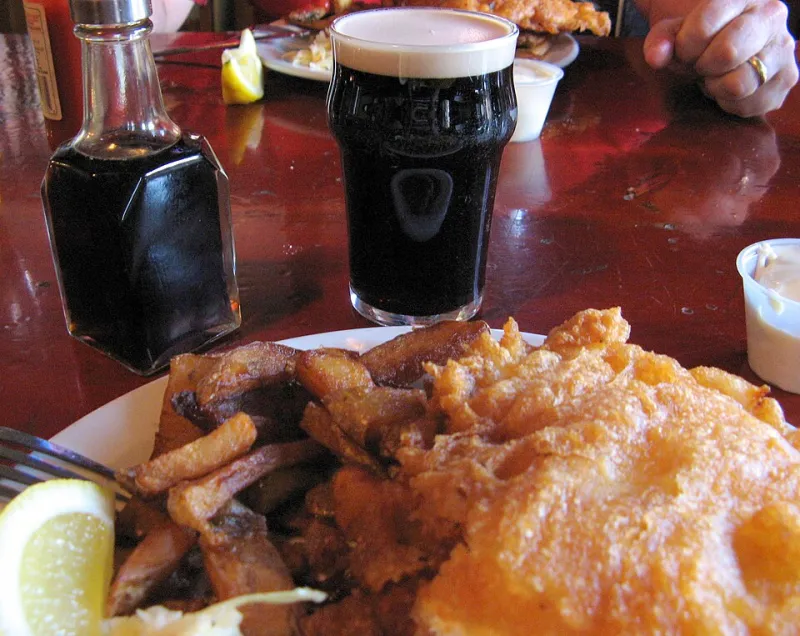
Photo: Andrea_44 from Leamington, Ontario , Canada, CC BY 2.0, via Wikimedia Commons
There is a bottle that lives in virtually every British household. It sits at the back of the cupboard, or in the chippie's case, on a formica table beside the salt, its label sun-faded and its contents a deep amber. Malt vinegar is so ubiquitous, so thoroughly woven into the fabric of the national diet, that we have stopped seeing it altogether. Yet strip it away, and the British palate loses one of its oldest anchors.
The Condiment of the People
Vinegar arrived in Britain long before the chippie. Brewers' experiments gone wrong, barrels of ale turning sour, were salvaged rather than discarded — and so vinegar became, by accident, the flavouring of thrift. When fried fish and later the chip made their combined debut in the mid-nineteenth century, malt vinegar was the natural companion: cheap, sharp, and made from the same barley that filled the nation's pint glasses.
What followed was a quiet monopoly. While France elevated wine vinegar and Italy perfected the aged balsamic, Britain settled into a contented relationship with one bottle. It sharpened mushy peas, cut through batter, lifted a plate of ham, egg and chips. It was, and remains, the taste of the seaside in liquid form.
The Mother of Invention
At a time when most supermarket vinegar is produced in days by submerged fermentation, a handful of British producers are doing things the slow way. Among them is a small heritage brewery in the West Country that still brews a proper pale ale — and then lets it turn deliberately, gloriously sour.
'People think vinegar is a failure of brewing,' the brewer told us, gesturing towards a row of oak casks crusted with what looks like a gelatinous, cobwebbed disc. 'That's the mother. A living culture of bacteria. It's been fed and passed down for decades. You can't rush it, and you can't fake it.'
The process is disarmingly simple and maddeningly slow. Ale is brewed from barley and hops, seeded with the mother, and left to breathe for months while acetic acid bacteria convert alcohol to acid. What emerges is a vinegar with depth — malty, faintly sweet, with a rounded sharpness that the mass-produced equivalent, often brewed from industrially produced spirit alcohol, simply cannot match.
From Chip Shop to Cheese Board
Here is where the story turns contemporary. The new wave of small-batch malt vinegars is finding its way onto deli shelves — and, more intriguingly, onto the cheese board.
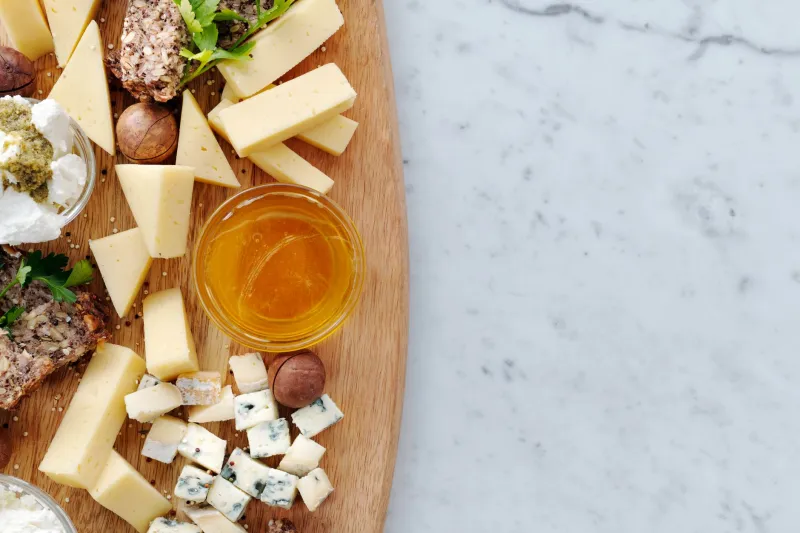
The instinct might seem wrong. Vinegar and cheese? But consider the logic: the acidity that cuts through hot batter works equally well against fat and salt. A few drops of aged malt vinegar over a crumbly Lancashire or a mature Cheddar does what a spoon of chutney does, only with more precision. It is a seasoning, not a sauce.
A few pairings worth trying at home:
- Malt vinegar and Cheshire cheese. The crumbly, lactic sharpness of a young Cheshire meets its match; a few drops intensify rather than compete.
- Aged malt vinegar with a proper pork pie. The traditional mint or brown sauce has a rival. The acidity slices through the jelly and the fat with surgical efficiency.
- Malt vinegar caramelised onions. The base of every good chutney, made better with a vinegar that carries actual malt character.
- A malt vinegar reduction over roast roots. Boiled down with a spoon of honey, it becomes a balsamic-style glaze with a distinctly British accent.
Reading the Label
As with any artisan revival, quality varies. Look for vinegars that declare their base — brewed from barley malt, ideally — rather than 'spirit vinegar with flavouring'. Check whether the producer mentions the mother, or barrel ageing. And expect a cloudy, unpasteurised product to keep developing in the bottle; that is not a flaw but a sign of life.
There is something fitting about the vinegar's renaissance. In a food culture often seduced by the exotic, the most British of condiments is being taken seriously on its own terms — not as nostalgia, but as craft. The bottle on the back of the counter was never ordinary. We simply stopped tasting it.
Time, perhaps, to bring it back into the light — and this time, to the cheese board.