Noon, But Make It Magnificent: The Quiet Elevation of the British Lunchbox
There is a particular melancholy to the traditional British packed lunch. A meal assembled in haste at seven in the morning, wrapped in cling film, and eaten under fluorescent light at noon — it has long been less a meal than a maintenance chore. We have spent the past decade lavishing attention on breakfast, treating brunch as a competitive sport, and rebuilding the cheeseboard into something approaching theatre. The lunchbox, meanwhile, has been left to fend for itself in the bottom of a tote bag.
That, I would argue, is a failure of imagination. And it is one the deli counter is uniquely placed to correct.
The Case Against Deskside Despair
Consider what we already know to be true at the weekend. We know that good bread matters. We know that a tin of quality fish, properly dressed, is one of the great pleasures of European eating. We know that a pickle made by someone with a pan and a point of view beats anything vacuum-sealed by a factory. None of this knowledge evaporates on a Monday morning. We simply stop applying it.
The packed lunch is where our food values go to hide. It is the only meal we routinely make without pleasure, eat without attention, and judge without mercy — and yet it is twelve o'clock, arguably the hungriest hour we have. A meal consumed at peak appetite deserves better than a meal deal.
The Leftover Is a Gift, Not an Apology
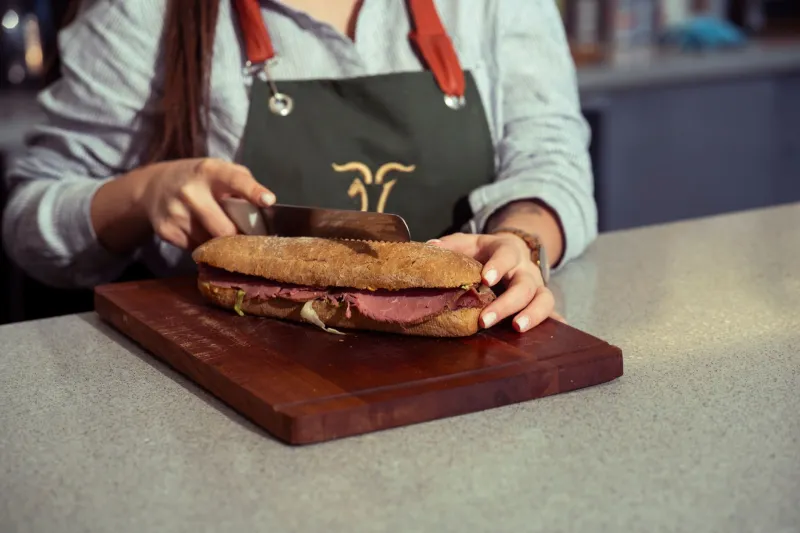
The most persuasive argument for the elevated lunchbox is the one already sitting in your fridge. Sunday's raclette, cold and sliceable, is not a remainder; it is an ingredient waiting for a second act. Layered between two halves of a proper sourdough with a scrape of wholegrain mustard and a few cornichons, it becomes a sandwich worth clearing a desk for. Cold roast potatoes, crushed and dressed with pickled shallots and a little of the oil from a jar of anchovies. A wedge of good cheddar with last month's apple chutney and a handful of watercress.
The deli's greatest secret is that lunch is a repurposing art form. The charcuterie ends, the cheese trimmings, the shallot brine — these are not scraps but the raw materials of something genuinely lovely. The French have understood this forever; the Italians built an entire culture on the pasta fritta. Britain's packed lunch tradition simply needs the same confidence.
When the Weekday Rivals the Weekend
Talk to the owners of Britain's better delis and a pattern emerges. The Saturday queue for the cheese counter was always dependable. What has changed is Wednesday. Increasingly, weekday trade — the lunchtime dash for a sandwich built to order, a tin of sardines, a spoonful of olives, a square of pork pie — is beginning to rival the weekend rush.
The reasons are not hard to fathom. Working from home has collapsed the distance between the kitchen and the desk, and with it the excuse of the canteen. People are eating lunch at home more often than at any point in a generation, and they have grown bored of their own defaults. The deli has stepped into the gap: part shop, part inspiration, part permission slip. Buy the good bread. Take the tin of mackerel in escabeche. Put the pickled shallots on it. You have twenty minutes; make them count.
A Modest Manifesto
None of this requires a manifesto, but it does require a small shift in standards. Three rules seem sufficient.
First, never build a lunch around bread you would not serve to a guest. Second, treat the tin with respect — good tinned fish, dressed with something sharp and something allium, is the highest-return move in the entire lunchbox repertoire. Third, always include one thing that makes you pause: a pickle, a cheese, a square of proper chocolate. Lunch should contain at least one moment that is not fuel.
The packed lunch will never carry the romance of the cheeseboard or the ceremony of Sunday lunch. But it is the meal we eat most often, and the one over which we have the most control. To neglect it is to surrender a fifth of our eating lives to the lowest common denominator.
Britain's food culture has spent twenty years learning that quality is not reserved for occasions. The lunchbox is simply the last holdout — the meal still waiting for its invitation. The deli counter, as ever, is holding the door open.