Parcel, Please: How the Monthly Artisan Box Became Britain's Most Anticipated Delivery

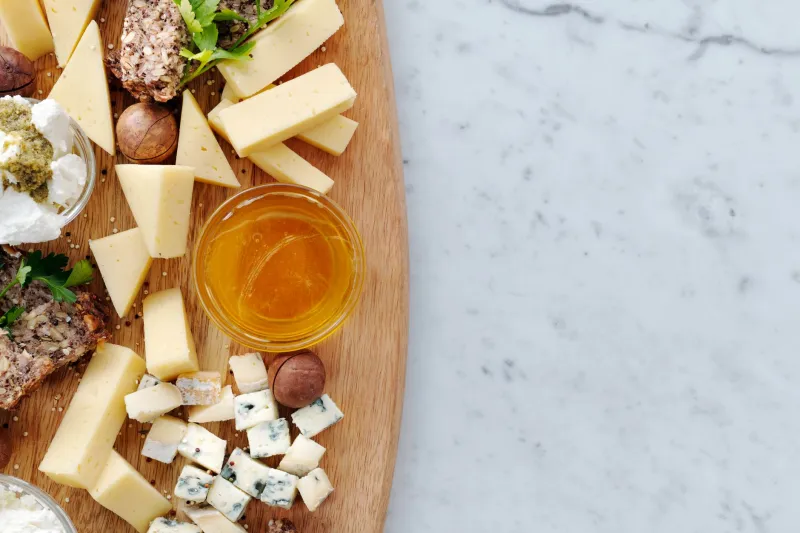
Photo by Photo by Melissa Walker Horn on Unsplash on Unsplash
There is a particular pleasure, familiar to anyone who has ever queued at a proper deli counter, in surrender. You approach the glass, you describe a mood rather than a product — something nutty, something for a grey Thursday — and you trust the person behind the counter to decide. The subscription box, that most modern of retail inventions, has managed to bottle precisely this sensation and post it to your door.
Over the past five years, the monthly artisan food box has evolved from novelty to institution. Cheese clubs ship wedges of Lincolnshire Poacher and rolling hills of Alphington blue to subscribers from the Highlands to the Home Counties. Charcuterie subscriptions parcel up air-dried coppa from the Yorkshire Dales and salami fermented in converted Somerset barns. There are condiment clubs, honey deliveries, even a growing trade in monthly vinegar. Britain, it seems, has developed a taste for delicious post.
The Antidote to the Conveyor Belt
The appeal is not hard to diagnose. The supermarket shop, for all its convenience, is a closed loop: you buy what you already know, arranged in the same aisles, week after week. The subscription box breaks that loop with a small, regular act of surprise. It is, in essence, a deli counter that comes to you — one where the cheesemonger's choices have been made in advance, and where a producer you have never heard of in Cumbria or Carmarthenshire can end up on your board by Friday.
For small producers, the model has been quietly transformative. A single box curator with a few thousand subscribers can become a meaningful customer for a farm dairy that would struggle to crack supermarket listings. The subscription, done properly, is a distribution channel for the little people — a way for a two-person creamery in the Chilterns to reach tables in Tooting and Tollcross without a marketing department.
The Gimmick Question
But let us not be misty-eyed. Not every box deserves the doormat it lands on. The model's low barrier to entry has produced its share of cynicism: boxes padded with own-label crackers, 'artisan' relishes that appear to have been bought wholesale by the pallet, and subscription schemes whose real product is the subscription itself — a billing relationship dressed as a food discovery.
The tell is usually in the sourcing. A serious curator names their producers, on the card, in the box, every month. A gimmick hides behind vague talk of 'curated gourmet finds'. If the enclosure card reads like a love letter to a specific farm in the Eden Valley, you are in safe hands. If it reads like marketing copy for a warehouse, cancel before the third billing cycle.
The Curators Getting It Right
A few operations stand out for the right reasons. The Cartwheel, a cheese subscription run out of London's Spa Terminus, works directly with British farm dairies and rotates its selection seasonally — expect a young clothbound in spring and richer, washed-rind numbers as autumn deepens. Its tasting notes read like those of a counter that knows its wheels personally, because it does.
In the charcuterie corner, Hampstead-based Cure & Co. (a collaboration between a trio of former restaurant buyers) sends quarterly boxes built around a single producer at a time — a deep dive rather than a scattergun selection. And for the pantry-minded, the Larder Post club out of Bristol delivers a rotating cast of small-batch pickles, honeys and drinking vinegars that would sit comfortably on any self-respecting condiment cabinet.
What unites them is a philosophy: the box is the messenger, not the message.
A Buyer's Guide to Boxes Worth the Postage
Before you commit to a monthly arrangement, apply a few simple tests.
Read the producer list, not the price. A box that names six named farms and dairies is worth more than a cheaper one that name-drops 'European delicacies'.
Check the seasonal logic. Good curators change with the grazing calendar. A cheese club shipping the same selection in February as in August is a shop, not a curator.
Interrogate the freshness. Cheese and charcuterie are perishable. Reputable operations ship early in the week, use chilled packaging and tell you exactly how long each item keeps.
Look for the pause button. A confident subscription lets you skip a month without a fight. Confidence in the product means no fear of the pause.
Beware the filler. Count the 'hero' items versus the crackers and chutneys. If half the box is edible packaging, the maths does not favour you.
A Good Kind of Dependence
There is something faintly old-fashioned about the whole enterprise — the anticipation, the parcel, the sense of a relationship with an unseen purveyor. It is the grocery equivalent of the magazine subscription or the village milk delivery: a small, recurring pleasure that arrives whether you remembered to want it or not.
Done well, the artisan box is not a shortcut around the deli counter but an extension of it — a counter that reaches further, sources deeper and posts its enthusiasm in cardboard. And if the occasional box disappoints, consider it the price of discovery. Every great wedge you will ever taste was, at some point, a gamble.