Sliced, Smothered, Sublime: How Toast Became the Deli Counter's Greatest Canvas
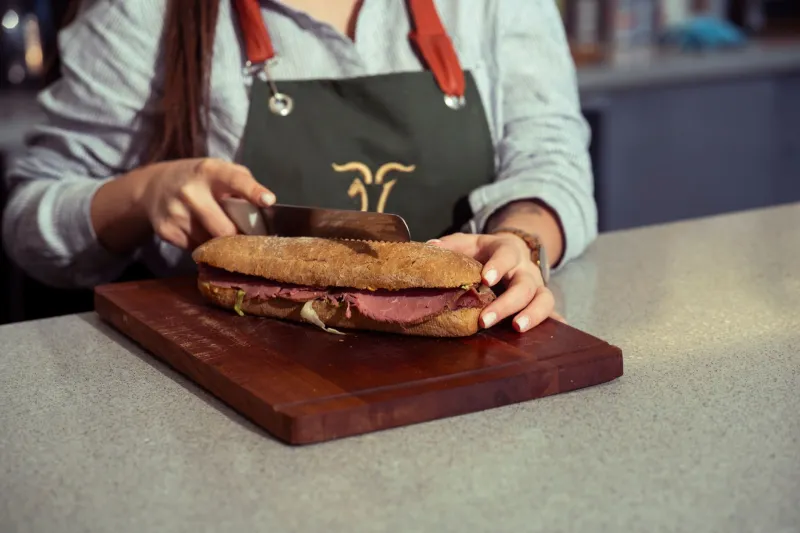
There is a moment, familiar to anyone who has lingered at a good deli counter on a Saturday morning, when the bread is cut. Not sliced thinly, as a supermarket would have it, but cut — a slab two fingers wide, crust intact, crumb open and honeycombed like a sponge left out in the sun. This, we have come to understand, is not merely bread. It is the beginning of something.
Toast, that most humble of British institutions, has spent the past few years quietly climbing the culinary ladder. What began as a breakfast afterthought — something to hold marmalade — has become the centrepiece of deli menus from Marylebone to Manchester. And we, for one, could not be more delighted.
From Afterthought to Headline Act
The transformation did not happen overnight. It required, first, the sourdough revolution: the proliferation of neighbourhood bakeries fermenting loaves over 24 and 36 hours, producing slices with real structure, real tang and real capacity to hold a topping without collapsing into soggy defeat. Once the bread improved, everything placed upon it had to follow.
The result is what we might call the deli toast: a generous slab, properly toasted, properly buttered — or properly oiled, depending on persuasion — and crowned with ingredients that would once have required a whole plate to justify themselves. Whipped ricotta with hot honey and thyme. Smoked mackerel pâté with pickled shallots. Mushrooms in garlic butter with a fistful of cheddar melted over the top. These are not toppings; they are statements.
There is something rather civilised about the format, too. A slice of toast is portion control for the indulgent. It permits the eating of a full slab of pâté with a clear conscience, because technically, one has only had toast.
The Marriage of Loaf and Topping
Not all breads are equal to all tasks, and this is where the deli counter's expertise reveals itself. A dense, dark rye — the kind that squeaks slightly under the knife — is a marvellous partner to something rich and oily: smoked salmon, anchovy butter, a slick of crème fraîche and dill. The bread's sourness cuts through the fat like a well-placed quip.
An open-crumb sourdough, by contrast, is the socialite of the bread world: it mingles. Its airy structure drinks up olive oil, hot honey, tomato juices, everything. It wants to be soaked. Give it burrata and blood oranges in February, or crushed peas and pecorino in June.
And then there is the brioche-adjacent option — enriched, buttery, faintly sweet — which demands toppings of matching decadence. Whipped ricotta and hot honey was made for it. So, frankly, was salted butter and a scrape of Marmite, though we would never say so at the counter.
The Under-a-Fiver Deli Toast, Assembled at Home
The great joy of this dish is that its theatre costs almost nothing. Here is our formula for a genuinely splendid deli toast, assembled for well under £5.
The foundation: One thick slice of proper sourdough from your local bakery — expect to pay £1 to £1.50, or less if you befriend the baker and buy yesterday's.
The anchor: A soft, spreadable base. A quarter-pot of ricotta, whipped with a splash of milk and salt (about 60p), transforms into something cloud-like and restaurant-worthy.
The flourish: This is where the deli counter earns its keep. A spoonful of hot honey (or ordinary honey warmed with chilli flakes) costs pennies. A few toasted walnuts from the baking shelf. Thyme from the window box.
The finish: Flaky sea salt, cracked pepper, and a decisive drizzle of your best olive oil.
Total: approximately £2.80, with ricotta and honey remaining for two further toasts. The arithmetic, as any delicatessen loyalist will tell you, is beautiful.
For the savoury-inclined, substitute the ricotta with a tin of good smoked mackerel, mashed with a fork, a squeeze of lemon and a dollop of crème fraîche. Crown with pickled red onion and you have, for barely more money, the finest lunch in Britain.
Why It Matters
One could dismiss the deli toast as trend-driven frippery. We would argue the opposite. It represents everything the modern British delicatessen stands for: excellent bread treated with respect, small-batch condiments given a stage, and the conviction that a single slice, thoughtfully assembled, can be a complete and generous act of eating.
It is also, crucially, democratic. No specialist equipment, no technique beyond patience with the toaster. Just good bread, good things, and the wisdom to put one on top of the other.
So this weekend, cut thick. Toast slow. Butter generously. And remember the rule that governs all great deli counters: the bread is never just the vehicle. It is half the journey.