The Small Print Worth Savouring: How to Actually Read a Deli Label
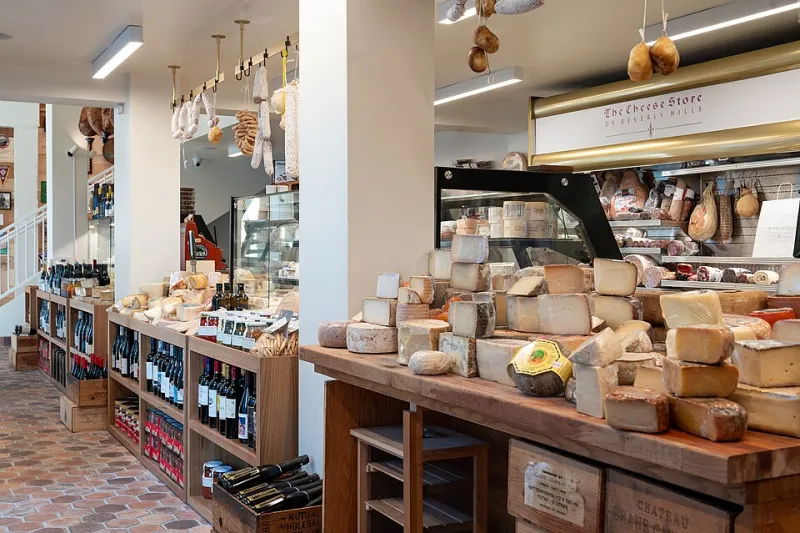
Photo: CaliEditor76, CC0, via Wikimedia Commons
There is a particular species of panic that descends upon even the most confident shopper at the deli counter. The cheese looks magnificent. The label, however, reads like a treaty drafted by lawyers, farmers and marketers in equal measure — and it is rarely clear which of the three is speaking.
The truth is that much of the vocabulary adorning British artisan food carries real weight: legal protections, agricultural tradition, months of patient cellar work. Some of it, inevitably, is decoration. Learning to tell the difference is one of the most useful skills a food lover can acquire, and it costs nothing but attention.
The Mark That Actually Means Something
Start with the most reliable signal on any package: the PDO — Protected Designation of Origin. This is not marketing gloss; it is European and, post-Brexit, retained UK law. A PDO certifies that a product was produced, processed and prepared within a specific geographic region, using recognised methods. Melton Mowbray pork pies, Stilton from its defined counties, Cornish clotted cream — all carry the mark because a committee of inspectors says they must.
Its cousin, the PGI (Protected Geographical Indication), is slightly looser: at least one stage of production must happen in the named region, but not necessarily all of it. Still meaningful. Still audited. When you see either, you are buying provenance you could, in principle, verify in a courtroom.
Then there is the TSG — Traditional Speciality Guaranteed — which protects method rather than geography. It tells you a product is made the old way, wherever the old way is practised. Useful, if less romantic.
Unpasteurised: Risk, Reward and the Raw Milk Question
Few words on a cheese label provoke as much quiet controversy. 'Unpasteurised' — or 'raw milk' — means the cheese was made from milk that has never been heated above roughly 40°C, preserving the native bacteria and enzymes that many producers argue give traditional cheeses their depth.
The case for is compelling: complexity, terroir, a living connection between pasture and plate. The case for caution is equally real: raw milk cheeses are technically higher-risk, which is why British rules require raw milk cheeses to age for a minimum of 60 days before sale. The sensible position? Raw milk cheese from a reputable, inspected producer is a joy. Buy it, store it properly, eat it promptly — and note that pregnant women, the very young and the immunocompromised are generally advised to steer clear.
What 'unpasteurised' is not is a synonym for 'better'. A superb pasteurised cloth-bound Cheddar will embarrass a mediocre raw one every time. Treat it as information, not a grade.
Ageing Claims and the Arithmetic of Patience
'Aged 24 months' sounds impressive, and often is — but only if you know what is being aged. Time in a cellar concentrates flavour, moisture loss and, frequently, price. A 24-month Comté is a genuinely different animal from its 12-month sibling: firmer, nuttier, crystalline with tyrosine crunch.
But ask what the ageing actually involves. A cheese 'aged' in a temperature-controlled distribution warehouse is a different proposition from one matured in a producer's own cave, turned and brushed by hand. The best counters will tell you the difference unprompted. The best question to ask is disarmingly simple: 'Who matured it, and where?'
Rind Science in Three Sentences
'Washed rind' means the cheese has been regularly bathed in brine, or sometimes beer or spirits, encouraging the sticky orange bloom and the famously pungent aroma — think Epoisses or the excellent British examples from Kent and Yorkshire. 'Natural rind' means the rind formed on its own with minimal interference, typically on cloth-bound and alpine-style cheeses. 'Bloomy' or 'white mould' covers your Camemberts and Bries, dusted with Penicillium candidum for that velvet coat.
None of these terms denote quality. They denote style. A pungent washed rind is not 'stronger, therefore superior' — it is simply a different instrument in the orchestra.
When Language Is Doing the Heavy Lifting
Now for the humbler vocabulary. 'Artisan', 'handmade', 'traditional' and 'craft' carry no legal definition in UK food labelling. They may be entirely true — or entirely atmospheric. 'Farmhouse', similarly, is evocative rather than enforceable. 'Mature' on a Cheddar tells you little without a month count to back it up.
This is not a licence for cynicism; Britain's small producers are among the most honest in the world. It is simply a reminder that adjectives are free, while PDO status, milk type and maturation details must be earned and declared. Weight the latter. Enjoy the former, lightly.
A Glossary Worth Pinning to the Fridge
- PDO — produced, processed and prepared in a protected region, by law.
- PGI — at least one production stage tied to a protected region.
- TSG — traditional method guaranteed, geography not required.
- Unpasteurised / raw milk — unheated milk; more complexity, more care required.
- Cloth-bound — aged wrapped in muslin and lard; expect earthy, brothy depth.
- Washed rind — brine-bathed, sticky, aromatic; the diva of the counter.
- Natural rind — self-formed with minimal intervention.
- Bloomy rind — white-mould velvet; Camembert, Brie and kin.
- Aged X months — time in maturation; ask where and by whom.
- Affiné — matured, often by a specialist, after leaving the dairy.
Shop with these in your pocket and the counter becomes less intimidating and more invitational. The label, after all, is simply the producer's side of the conversation — and now you know which parts to believe.