The Fruit That Waits: Reconsidering Quince for the Autumn Board
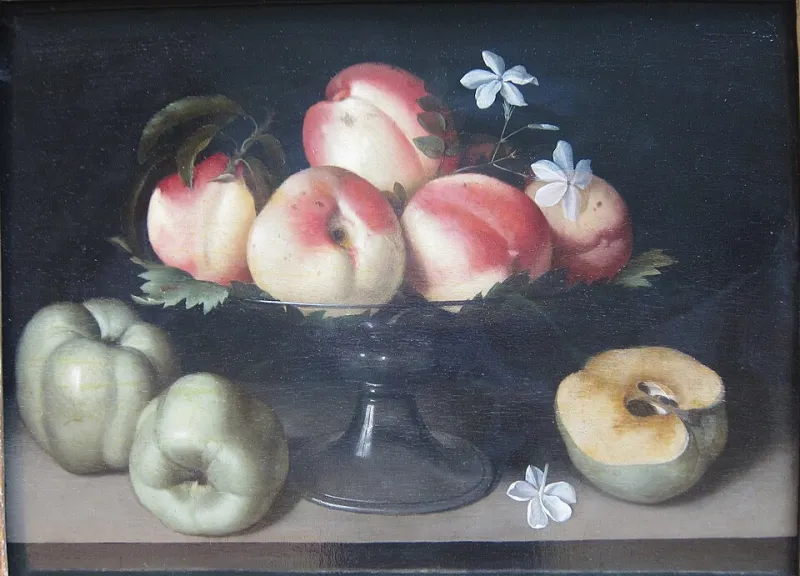
Photo: Fede Galizia, Public domain, via Wikimedia Commons
There are fruits that announce themselves and fruits that wait. Quince belongs firmly to the second group. It arrives in late autumn, often lumpy and hard, sometimes dusted with a faint down, and it refuses to be eaten raw with any enthusiasm. Yet it carries an aroma so piercingly beautiful that it can make a whole room feel warmer. For anyone who has poached a quince slowly in syrup, or spooned membrillo beside a wedge of cheese, the fruit is not obscure at all. It is essential. The difficulty is that Britain has spent several generations forgetting what to do with it.
A fruit with a past
Quince has been cultivated for centuries and has a history in Britain that reaches well beyond the modern greengrocer's shelf. It was grown in monastery gardens and country orchards, valued for its keeping qualities and its ability to set into preserves. Before the convenience of imported fruit and the dominance of the apple, quince had a secure place in the British kitchen. It appears in old recipes for pies, conserves and sweetmeats, and its name lingers in the language of orchards even where the trees themselves have disappeared.
That history matters because it reminds us that quince is not an exotic interloper. It is a traditional British fruit that fell out of fashion as orchards were grubbed up and shopping habits changed. Its revival is not a matter of rediscovering a foreign delicacy. It is a matter of returning to something that was once ordinary, and finding that it was extraordinary all along.
Why November suits it
Quince is harvested in autumn and often needs time to ripen fully indoors. By November, the fruit is at its most fragrant and the kitchen is ready for the long, slow cooking it demands. This is also the moment when the cheese board begins to turn richer and more substantial. The first of the winter Cheddars, the blues that have had time to develop, the washed-rind cheeses that smell of barn and butter: these are foods that can take a sharp, aromatic counterpoint.
Quince provides exactly that. Its flesh is tough and astringent when raw, but cooking transforms it into something rosy, tender and intensely perfumed. The flavour sits somewhere between pear, apple and citrus peel, with a floral note that is difficult to describe and impossible to mistake. It is a fruit that works with the season rather than against it. In a month of early dark evenings and cold mornings, that feels like a small act of generosity.
Poaching, preserving and membrillo
The simplest way to cook quince is to poach it. Peel the fruit, cut it into quarters or thick slices, and simmer gently in a light syrup of sugar, water and lemon juice. A vanilla pod, a strip of orange peel or a bay leaf can be added, but restraint is usually best. The quince will turn from pale yellow to a deep rose pink as it cooks, and the syrup will thicken around it. Served warm with a spoonful of cream, or cold beside cheese, poached quince is one of the great quiet pleasures of the British autumn.
Membrillo, the firm quince paste associated with Spain, is another useful preparation. It can be made at home by cooking quince pulp with sugar until it is thick enough to set, then pouring it into a lined tin to cool. The result is a dense, sliceable paste that keeps well and cuts through the richness of cheese with precision. A small amount is enough. Membrillo is not a preserve to be spread thickly; it is a condiment, and it should be treated with the same respect as a good chutney or a spoonful of honey.
At the cheese board and charcuterie table
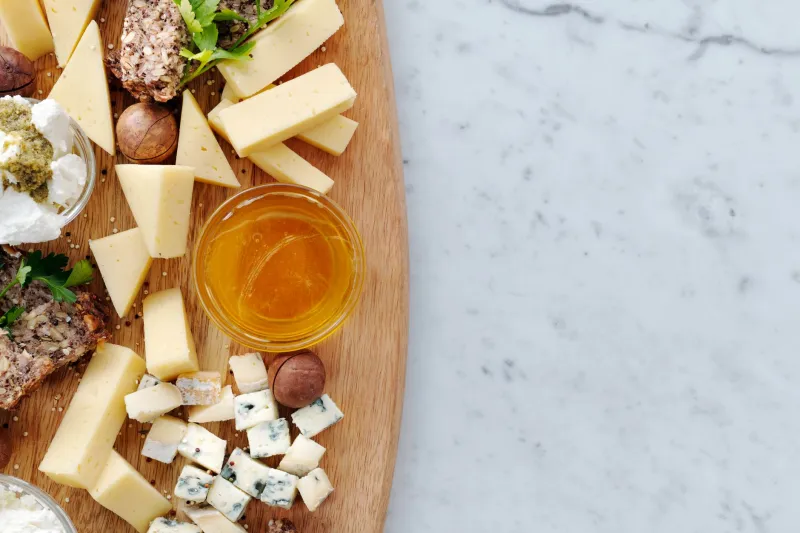
Quince and cheese are a natural pairing because they share a certain intensity. A slice of membrillo with a mature Lancashire or a crumbly Cheshire is a fine thing, the fruit's sharpness lifting the cheese's lactic sweetness. With a blue cheese, quince can be even more effective. The paste's aromatic sweetness tempers the salt and cream, while its acidity keeps the palate fresh. A poached quince, served slightly warm, can do something similar for a soft, bloomy cheese, especially if the rind is fully ripe and a little mushroomy.
Charcuterie benefits too. A slice of cured ham or a coarse terrine can be overwhelmed by a sweet chutney, but quince has enough acidity to hold its own. Membrillo cut into small cubes and served with a slice of good ham is a simple, elegant combination. Poached quince can also be added to a winter salad with bitter leaves, walnuts and a little blue cheese, where its perfume brings the whole plate together.
Finding British fruit
British-grown quince is not always easy to find, but it is worth seeking out. Farmers' markets, greengrocers and specialist orchard growers are the best places to start. Some varieties are more reliable than others, and a conversation with the grower will often tell you more than a label. Look for fruit that is heavy for its size and deeply fragrant; a quince that smells of nothing will taste of little. If the fruit is very hard, leave it in a cool room for a week or two before cooking.
The fruit's season is short, and its presence is quiet. That is part of its appeal. Quince does not demand attention in the way that a perfect peach or a ripe fig might. It waits, and it rewards patience. In a month when the cheese board is at its most generous, that is exactly the quality we should be looking for.