The New British Ploughman: How Artisan Charcuterie Is Quietly Conquering the Deli Counter
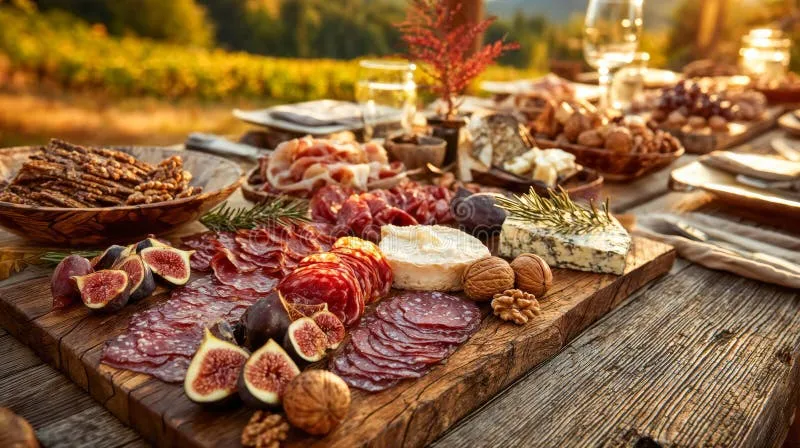
Photo: artisan charcuterie board with cured meats rustic wooden table, via thumbs.dreamstime.com
There was a time when the word charcuterie conjured only one image: a Frenchman in a striped apron, saucisson sec swinging from the rafters of some sun-drenched Provencal market. That image, charming as it is, no longer tells the whole story. Across Britain — in converted barns, coastal smokehouses and hillside curing rooms — a new generation of producers is proving that this island can cure meat with the very best of them.
A Tradition Older Than You Think
The idea of British charcuterie is not, in fact, a novelty. Our ancestors were preserving meat long before anyone thought to give the practice a French name. Air-dried hams were commonplace in medieval households; smoked and salted meats sustained communities through long winters. What today's producers are doing is not inventing a tradition so much as reclaiming one — and elevating it with modern craftsmanship.
Consider Trealy Farm in Monmouthshire, whose air-dried lamb has become something of a cult item. Salting the meat and hanging it until it develops a deep, almost parma-like intensity, they produce a cured lamb that tastes of the Welsh hills — grassy, mineral, faintly sweet. It is unlike anything coming out of Italy or Spain, and that is precisely the point.
The Producers Redefining the Board
Travel north and the story continues. In the Yorkshire Dales, small-scale game specialists are curing venison with juniper and bay, producing slivers of deep crimson meat that carry the wildness of the moor in every slice. Meanwhile, in the Scottish Highlands, producers are experimenting with whisky-cured beef and venison bresaola, drying it in the cool Highland air — conditions, it turns out, every bit as favourable as those of the Alps.
Norfolk's marshland has given rise to its own cured pork traditions, while in Kent and Sussex, charcutiers are working with free-range pigs reared on acorns and orchard windfall, producing salami and air-dried hams that rival their continental counterparts. What unites them all is provenance: short supply chains, rare-breed animals and a stubborn refusal to compromise.
Building a British Charcuterie Board
So how does one assemble a board worthy of the cause? Start with three or four meats, chosen for contrast rather than quantity.
- Air-dried Welsh lamb — slice paper-thin; its richness pairs beautifully with something sharp.
- Cured Yorkshire venison — lean and fragrant; a little goes a long way.
- Rare-breed salami — look for one made with British wild fennel or native herbs.
- Smoked duck or goose breast — an unexpected but deeply satisfying addition.
Accompaniments should be equally local. A spoonful of piccalilli from a good deli, oatcakes from Scotland, quince jelly made with British fruit, and perhaps some pickled walnuts. The idea is not to imitate a Tuscan board but to compose something that could only have come from these isles.
What to Pour
British charcuterie deserves British drink. A crisp English sparkling wine — the high acidity of a Nyetimber or Chapel Down cuts beautifully through fatty cured pork — is an obvious winner. For beer drinkers, a well-made British pale ale or a malty amber ale works wonders with smoked meats. And for something less conventional, a dry cider from Herefordshire or Somerset is arguably the most natural pairing of all: apples and pork have been companions on this island for centuries.
The Case for Going Local
There is a quiet pleasure in serving guests something they cannot find elsewhere — a cured lamb they have never tasted, from a farm they have never heard of, made by people who answer their own phones. That, ultimately, is what the British charcuterie renaissance offers: not imitation, but identity. The next time you find yourself reaching for the same old salami, pause. There is a whole island of flavour waiting to be sliced.