Golden Cargo: How the Humble Tin of Fish Became Britain's Most Coveted Deli Trophy
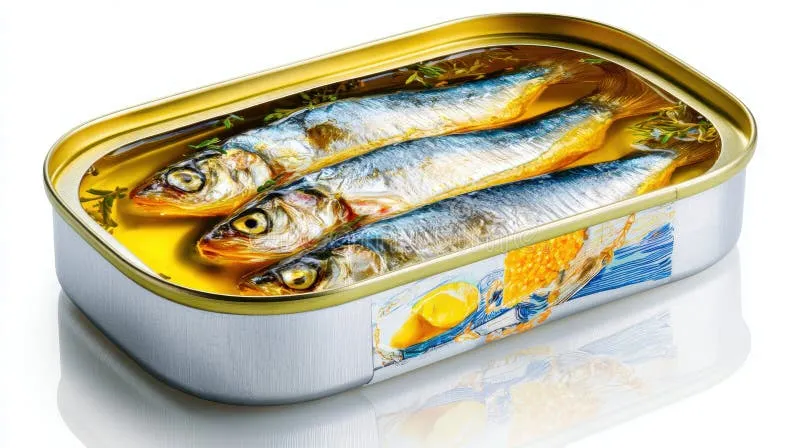
Photo: artisan tinned fish conservas display deli counter sardines olive oil tins, via thumbs.dreamstime.com
There was a time — not so long ago — that a tin of fish lived at the back of the cupboard, behind the lentils, slightly dusty, slightly apologetic. Today, it sits front and centre, often in a hand-illustrated sleeve, occasionally behind glass, and increasingly at prices that would once have bought you a decent piece of fresh cod. The tinned fish renaissance is no longer a whisper from Spanish food blogs; it is a full-throated chorus echoing down Britain's high streets, and the deli counter is its concert hall.
From Cupboard Shame to Shelf Pride
The transformation is partly aesthetic, and there is no shame in admitting it. Portuguese and Galician producers have long treated their packaging as an art form — sardines rendered in Art Deco flourish, mackerel in jewel-toned wrappers, vintage tins traded like wine among collectors. British retailers have noticed. Walk into any self-respecting delicatessen from Bristol to Edinburgh and you'll find a shelf flexing with conserved fish: whole sardines in olive oil, octopus in paprika, bonito del norte arranged like precious cargo.
But packaging alone does not sustain a movement. What keeps people buying is what's inside: fish caught at the right moment, preserved within hours of the landing, often by hand. The tin, it turns out, was never a compromise. It was a technique all along.
The Sustainability Angle Nobody Expected
Here is the delicious irony: at a time when conscientious eaters fret over the provenance of fresh fish, the preserved aisle offers some of the most responsible choices on the shelf. Small pelagic species — sardines, sprats, mackerel, herring — sit low on the food chain, breed quickly, and are largely landed by smaller vessels closer to home than the industrial fleets we rightly worry about.
Britain's own waters supply much of this quietly virtuous larder. Cornish mackerel tinned in cider, Cornish sardines in cold-pressed rapeseed oil, even herring from the North Sea dressed in mustard — these are products with a postcode, a season and a story. For the shopper who wants luxury without the environmental bill, the tin is increasingly the honest answer.
What the Tin Does That the Fridge Cannot
There is also a culinary argument, and it is a strong one. Preserving is transformation, not merely storage. Time in the tin mellows and deepens; oils carry flavour into every flake; the fish emerges tender in a way fresh fish rarely achieves without a chef's intervention. A tin of good sardines needs nothing but good bread, butter and a moment of peace.
Consider the pantry staples worth seeking out:
- Galician sardines in olive oil — plush, mineral, best drizzled with the tin's own oil over toast
- British mackerel in cider or vinegar — sharp, bracing, brilliant with apple and mustard
- Anchovies from Cantabria — the connoisseur's shortcut to depth in almost anything
- Smoked Cornish sprats — a neglected native, transformed by a few months in oil
Building the Conservas Board
The natural endpoint of all this enthusiasm is the board — and the conservas board is the charcuterie board's cooler, more intriguing cousin. Begin with three or four tins of contrasting character: one oily and rich, one sharp and pickled, one shellfish, one smoked. Decant them onto small ceramic dishes; the tin is charming, but the table deserves better.
Around the fish, assemble the supporting cast: a baguette or good sourdough, salted butter, cornichons, marinated white beans dressed with sherry vinegar, perhaps some blistered Padrón peppers. A lemon, cut into wedges. Something sharp to cut through the oil — a bitter leaf salad, pickled onions.
For drink, keep it simple and cold: a crisp Albariño, a dry manzanilla, or — for the patriotic pour — a chilled English white with enough acidity to hold its own. The mood should be low-lit, unhurried, faintly Iberian.
The New Status Symbol
Status, in food, used to mean rarity and expense — the truffle, the turbot, the trophy bottle. The designer tin has rewritten the rules. Its value lies in craft, in story, in the quiet knowledge of the person who chose it. A ten-pound tin of line-caught albacore, given with confidence, says more about the giver than any bouquet of supermarket roses.
Britain's pantry shelves have flexed, and rightly so. The tin is no longer the poor relation of the fish counter. It is the heirloom, the collector's item, the golden cargo — and it has earned every inch of that front-row shelf.