Embers and Patience: Inside the Quiet Revival of the British Smokehouse
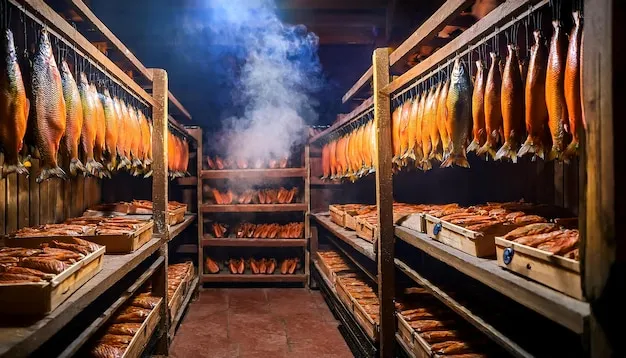
Photo: artisan smokehouse shed with smoke rising, smoked fish hanging on racks, via img.freepik.com
There is a moment, just before dawn on the east coast of Scotland, when the smoke rises from the little whitewashed sheds of Arbroath in slow, deliberate columns. It is not the aggressive plume of industry but something gentler — the signature of a craft that has barely changed in centuries. Haddock, split and salted overnight, hang in pairs over smouldering hardwood and peat, absorbing flavour the slow way. The result is the Arbroath smoky, granted Protected Geographical Indication and, arguably, still the purest expression of British smoking there is.
For much of the last century, smoke was treated as a matter of utility — a preservative, a flavouring squeezed between the lines of industrial food production. Liquid smoke, that pale imitation, did the rest of the damage. But walk any decent farmers' market or deli counter today and something has shifted. Smoke, it seems, is having its moment.
The Old Craft, Reconsidered
Britain's smoking traditions are older and more various than we tend to give them credit for. The Arbroath smoky is the most famous, but it is hardly alone. In Yorkshire, the Whitby kipper holds its own; in Norfolk, smoked eel — once the staple of the Broads' fishermen — is enjoying a careful, sustainable revival. Cornwall, meanwhile, has long laid claim to a curious hybrid: smoked cheddar, cold-smoked over oak until the rind turns the colour of well-worn leather, the paste beneath keeping its crumbly, lactic bite.
What unites these traditions is patience. Cold smoking — the method behind most smoked fish and cheese — happens at temperatures below about 25°C, sometimes over many hours, sometimes over days. There is no rushing it. The smoke must be thin, clean and cool, drawn from hardwood that has been seasoned properly. Get it wrong and the result is acrid; get it right and the flavour lands somewhere between the sea, the fire and the wood.
The New Smokemasters
The revival, though, is not merely a matter of preservation. A new generation of producers is treating smoke as a creative medium in its own right. In London, small-scale curing operations have taken to rooftops and railway arches, curing salmon with beetroot, whisky or miso before finishing it over oak chips. In Somerset and the Scottish Highlands, smokeries are experimenting with local woods — apple, cherry, alder — the way a winemaker might speak of terroir.
The vocabulary has shifted accordingly. Where once we spoke of smoked salmon, we now speak of how it was smoked: kiln-dried, oak-smoked, peat-fired. The deli counter, ever the barometer of the nation's appetite, has responded. Smoked butter, smoked salt, even smoked honey now sit alongside the more familiar wares, each one a small argument that smoke deserves a place at every course, not merely the starter.
Bringing Smoke Home
The encouraging news for the home cook is that this is one craft that translates remarkably well to the domestic kitchen. A stovetop smoker — or, failing that, a lidded roasting tin lined with foil, a handful of wood chips and a wire rack — will produce genuinely impressive results. Cold-smoking at home requires more kit and more caution, but hot-smoked fish is well within reach of a Sunday afternoon.
Begin simply. A side of salmon, dry-cured overnight in salt and demerara sugar, then hot-smoked over oak until it flakes, will outclass most of what you can buy. Or take the lazy route to glory: wrap a whole mackerel in foil and let the smoke do the work.
What to Pour, What to Pair
Smoked food, being assertive, demands a partner with either matching confidence or cool restraint. A few combinations worth building a board around:
- Arbroath smoky and a crisp Fino sherry. The wine's saline edge meets the fish's peatiness head-on. A dry English sparkling wine works beautifully too.
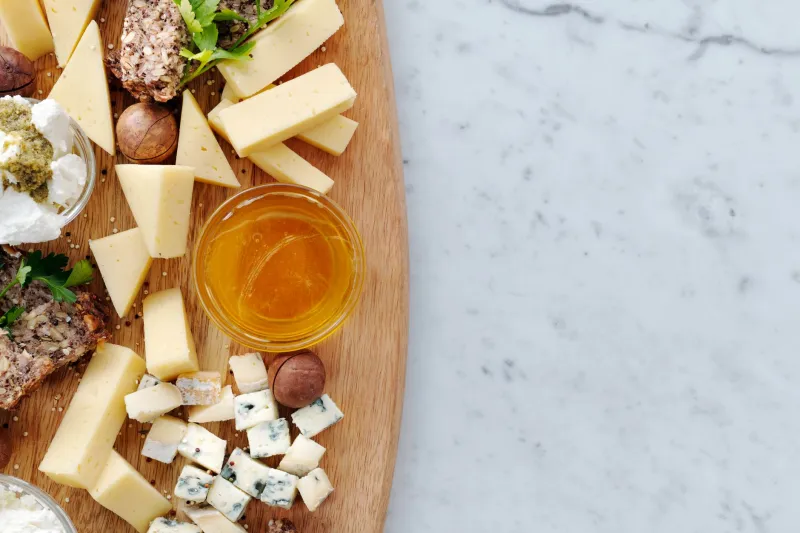
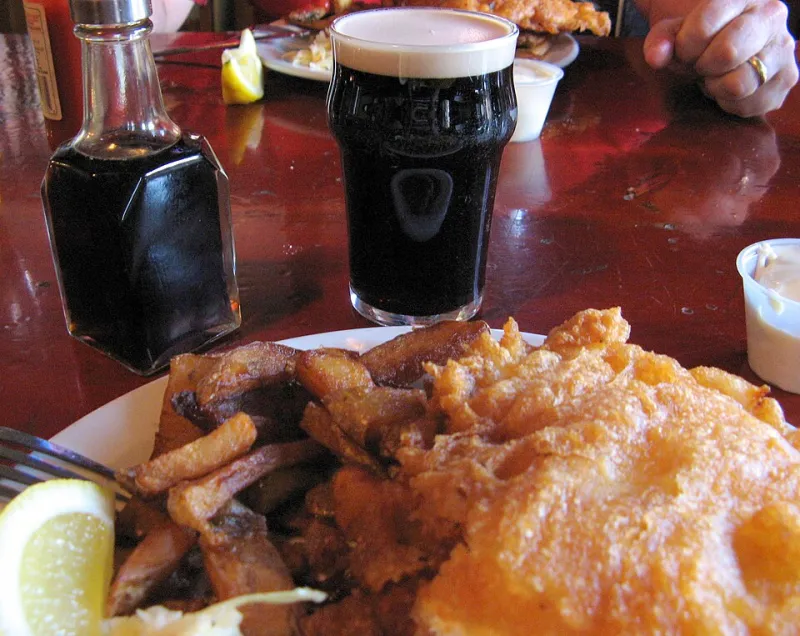
- Smoked cheddar and a malty dark ale. Or, for the cheeseboard proper, a spoonful of raw honey — the sweetness lifting the smoke rather than fighting it.
- Hot-smoked mackerel and horseradish. A marriage made on the coast: the heat of the root cutting through the richness of the fish.
- Smoked salmon and crème fraîche on rye. The classic, and unimprovable. Add a scattering of dill and a squeeze of lemon, and stop there.
Smoke, Considered
There is something fitting about smoke's resurgence at a time when so much of our food culture leans toward speed. Smoking is the antithesis of the instant: it asks for curing, for patience, for a fire tended with attention. It is, in that sense, less a technique than a temperament.
The next time you pass a smokery — and increasingly, you will — it is worth pausing. Behind that thin ribbon of rising smoke lies a very British story: regional, stubborn, quietly brilliant, and now, at last, getting the attention it deserves.