A Slice of Substance: The Artisan Pork Pie's Case for the Deli Counter
Photo: Himiller, CC BY-SA 4.0, via Wikimedia Commons
The pork pie has an image problem. In too many minds it remains a pale, gelatinous thing wrapped in plastic, bought from a motorway services and eaten without ceremony. That version exists, and it has done the reputation of the raised pie no favours. But it is not the whole story. Across Britain, a new generation of bakers and charcutiers is making pork pies with real care: coarse-cut pork, proper seasoning, a hot water crust raised by hand and a jelly that brings the whole thing together. These are not novelty items. They are serious deli provisions, and they deserve to be treated as such.
From tavern snack to counter centrepiece
The pork pie has a long history in Britain, rooted in the practical need to preserve meat and make it portable. The raised crust was originally a container as much as a pastry, sturdy enough to protect the filling and keep it from spoiling. Over time, the pie became a staple of taverns, markets and railway refreshment rooms. It was food for people on the move, but it was also food made with skill.
The mass-market version that dominated the late twentieth century stripped much of that skill away. Uniformity replaced character, and the pie became something to be eaten quickly rather than savoured. The revival now under way is not a nostalgic exercise. It is a correction. Bakers are returning to traditional methods, sourcing better pork and treating the pie as a product worth taking time over. The best examples are as considered as any terrine or cured sausage on the deli counter.
The difference a hand raises
The defining feature of a good pork pie is the hot water crust. Made with water and lard or butter, the dough is worked while warm and raised by hand around a mould. This is not a quick process. The crust must be strong enough to hold its shape, yet thin enough to eat pleasantly. It should have a savoury, slightly crisp quality, not a bland, thick wall of pastry.
The filling matters just as much. A handmade pie will usually use coarse-cut pork shoulder, sometimes with a little belly for richness. The seasoning should be assertive but balanced: white pepper, sage, nutmeg and mace are common, but the best pies taste of themselves rather than of a spice blend. The jelly, made from pork stock, should be savoury and gently set. It is there to moisten the filling and add depth, not to fill space.
A mass-market pie often reveals itself in the details. The meat is finely minced and uniform, the jelly is excessive and bland, and the crust is pale and soft. A handmade pie has texture and variation. It looks like something that was made by a person, not a machine. That is not a sentimental point. It is a guide to quality.
How to judge a good pie
Start with the crust. It should be golden, with a slight sheen and a firm but not rock-hard feel. When cut, it should hold its shape without crumbling into dust. The filling should be coarse and juicy, with visible pieces of meat rather than a paste. The jelly should be clear and savoury, and it should not overwhelm the pork. A good pie will taste seasoned throughout, not just on the surface.
Temperature matters too. A pork pie is best eaten at room temperature, when the fat is soft and the flavours are open. Served straight from the fridge, it will taste muted and the pastry will be hard. If you are buying from a deli counter, ask how long it has been out of the chiller. A good shop will have a view on this, and it will usually be the right one.
Pairings: pickles, cheese and a pint
The pork pie is a natural partner for pickles. A sharp onion, a crunchy gherkin or a spoonful of piccalilli cuts through the richness of the pork and the pastry. This is not a complex pairing, but it is a satisfying one. The acidity also prepares the palate for the next bite, which is more than can be said for a heavy chutney.
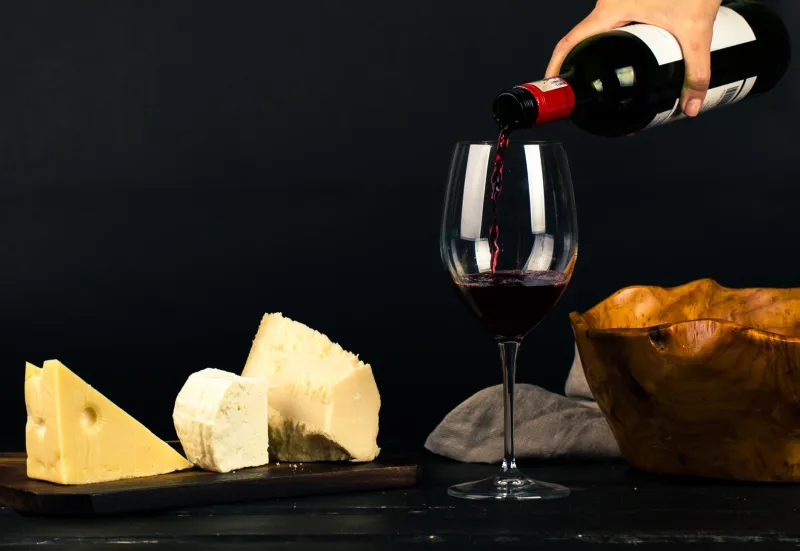
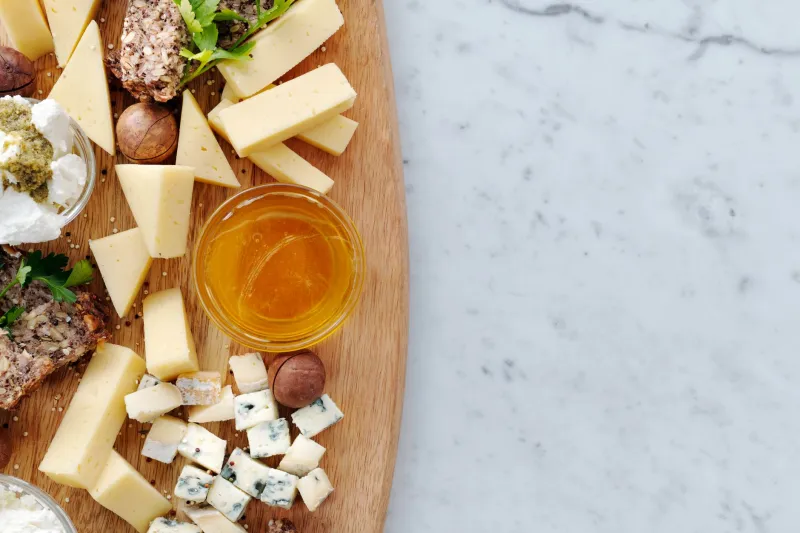
Cheese might seem an unlikely companion, but it works. A wedge of mature Cheddar or a slice of Lancashire, served alongside a slice of pie, makes a robust ploughman's-style plate. The cheese brings a lactic sharpness that contrasts with the seasoned pork, while the pastry provides a savoury base. A little mustard or a few cornichons will keep the plate from feeling too rich.
And then there is the pint. A bitter or a pale ale is the traditional choice, and for good reason. The hops and carbonation refresh the palate, while the malt echoes the savoury notes of the pie. A dry cider can work too, particularly with a coarser, more peppery filling. The point is to treat the pie as food to be matched, not just food to be eaten.
A place beside the charcuterie
The deli counter is a place of small distinctions. It asks customers to notice the difference between one ham and another, between a terrine made with care and one made to a price. The pork pie belongs in that company. It is a prepared meat product with a long tradition, a specific craft and a clear connection to the region where it is made. It deserves to be sold with the same attention as a saucisson or a rillettes.
That does not mean every pork pie is a masterpiece. It means the category should be taken seriously enough to reward the good ones. A handmade pie, sliced thickly and served with pickles and a little cheese, is a fine thing. It is not a novelty or a guilty pleasure. It is a piece of British charcuterie by another name, and it has waited long enough for a place at the counter.