Grass, Gingham and Good Taste: The Art of the Elevated British Picnic

Photo by Photo by Wladislaw Sokolowskij on Unsplash on Unsplash
There is a particular pleasure in eating well with the sky for a ceiling. No restaurant in the land, however lauded, can offer the combination of warm grass, cold prosecco and the distant sound of a cricket match that defines the great British picnic. And yet, for all its democratic charms, picnicking is routinely executed badly. Soggy sandwiches. Warm cheese. A bag of crisps crushed into regret somewhere between the car park and the blanket.
We would like to propose something better. The picnic, properly considered, is fine dining without the theatre — a tasting menu served at ground level, composed entirely of things that travel with dignity.
The Doctrine of Durability
The first rule of hamper construction is brutally simple: not everything delicious survives the journey. A ripe Vacherin, for instance, is a magnificent thing on a cheese board and a tragedy in a hot car. The wise picnicker selects accordingly.
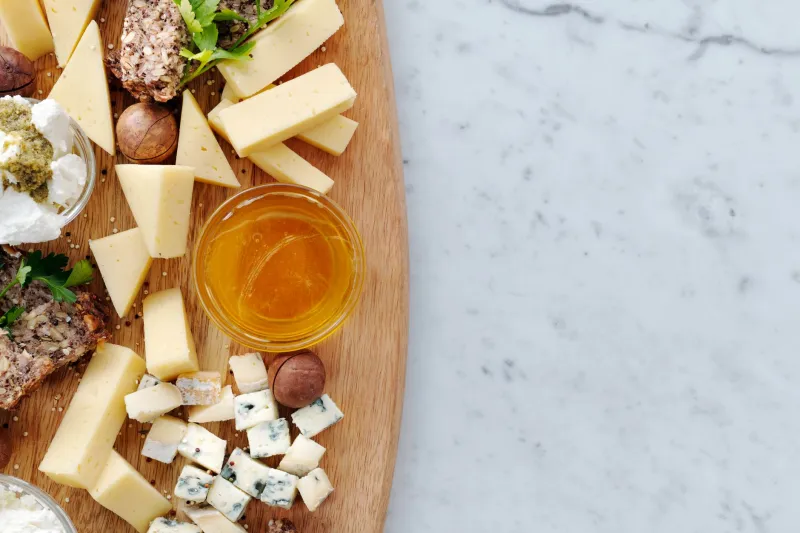
Hard and semi-hard British cheeses are your stalwarts. A cloth-bound Cheddar — Montgomery's or Lincolnshire Poacher, if your deli keeps them — cuts cleanly, holds its structure and tastes even better after an hour of gentle warming. A mature Lancashire or a crumbly Wensleydale brings acidity that cuts through richer fare. If you must bring a soft cheese, choose a firm-rinded goat's cheese such as Ragstone or Golden Cross, which will soften pleasantly rather than collapse entirely.
Charcuterie, meanwhile, was practically invented for this purpose. Cured, salted and dried meats are preservation in its most elegant form. Slice salami at home and pack it between sheets of greaseproof paper; bring whole cured chorizo and a small knife, and let the ritual of slicing become part of the entertainment.
Structure of the Spread
A well-ordered hamper obeys a rough architecture. Think in tiers:
- The foundation: a good loaf, torn rather than sliced, or a box of oat biscuits and charcoal crackers
- The centrepiece: cheeses and charcuterie in roughly equal measure, plus something pickled or sharp — cornichons, pickled walnuts, a jar of piccalilli with provenance
- The green note: a bag of watercress, some dressed heritage tomatoes in high summer, or simply a bunch of radishes with salted butter
- The sweet finish: more on this below, for it is where most picnics falter
- The wet goods: something sparkling, something still, and considerably more water than you think you need
Condiments deserve particular respect. A pot of proper mustard, a jar of chutney from last autumn's preserving session, a flask of dressing — these are the seasonings that elevate a gathering of ingredients into a coherent meal. Pack them in small jars with tight lids. Nobody has ever enjoyed reading the label of a shop-bought mayonnaise whilst seated on a hillside.
Pudding That Survives the Lane
The transport-proof pudding is a genuinely British engineering problem, and we have solved it many times over. Flapjack and parkin are the obvious heroes — dense, buttery, improved by a bumpy journey. A good lemon drizzle cake travels beautifully in its tin. Tarts with frangipane bases hold firm where custard-based cousins weep. And in late summer, nothing beats a box of strawberries and a small flask of cream, poured at the moment of consumption like the luxury it is.
Avoid, on pain of social embarrassment: anything involving whipped cream, meringue in humid weather, or chocolate in July.
A Year of Outdoor Eating
The picnic calendar runs longer than the fair-weather picnicker assumes. Consider:
April — asparagus tart, hard-boiled eggs with celery salt, a bottle of English rosé drunk from proper cups.
May — the first picnic proper: new-season lamb and mint pasties, Wensleydale, rhubarb cordial.
June — strawberries at their peak, a wedge of Berkswell, cold poached salmon and brown bread.
July — full theatre: charcuterie abundance, gazpacho in a thermos, a watermelon carried with commitment.
August — crab sandwiches on granary, salt and vinegar crisps deployed strategically, elderflower and something cold.
September — the connoisseur's month: plums, a cloth-bound Cheddar, pickled onions, and a flask of coffee as the light turns golden.
October — the bracing picnic: soup from a flask, pork pie, a huddle around a flask of mulled something. Pack a blanket with a waterproof back.
On Kit and Conduct
A brief word on equipment. A proper hamper or a sturdy cool bag with ice blocks is non-negotiable for cheese and meat safety — bacteria do not observe the pastoral idyll. Bring more napkins than seems reasonable, a cutting board, a sharp knife with a sheath, and a bag for everything that comes home. Leave no trace beyond faint admiration from neighbouring picnickers.
And perhaps that is the final argument for the picnic as Britain's most democratic fine-dining experience: the only critic present is the weather, and even that can be placated with a decent thermos and a well-chosen wedge. No reservation. No tipping. Just good ingredients, decent company and a patch of green. There are worse definitions of luxury.