The Weight of a Wedge: In Defence of the Hand-Cut Cheese Counter
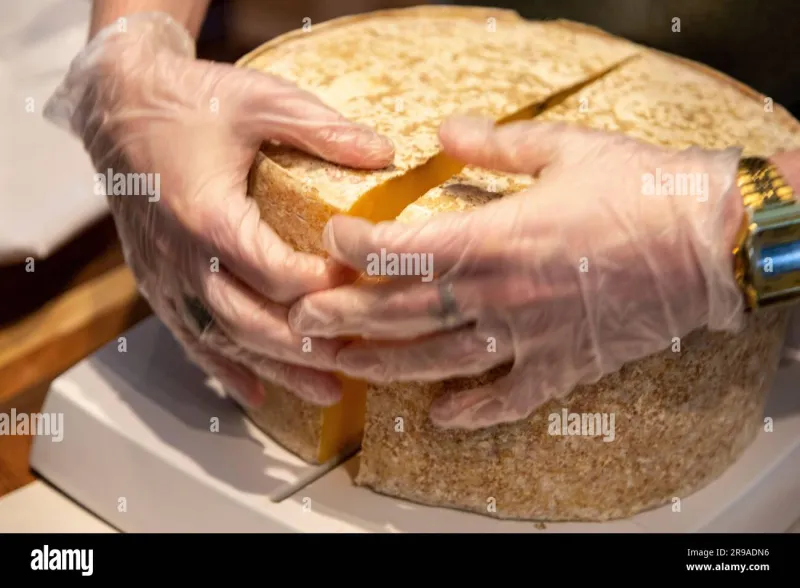
Photo: cheese monger cutting cheese wheel wire delicatessen counter, via c8.alamy.com
There is a particular sound that precedes a good cheese purchase. Not the beep of a scanner, nor the sigh of plastic film being peeled from a factory-sealed pack, but the dull, satisfying knock of a wire against a board. It is the sound of a decision being made — yours, in conversation with someone who knows the wheel.
Walk down most high streets now and you will find cheese sold in much the same way as batteries: weighed, wrapped, and anonymous. Portions cut in a distant factory, sealed weeks ago, their aromas muted and their textures flattened into uniformity. It is convenient, certainly. But convenience, as any cook who has wrestled open a sweaty plastic wedge will tell you, is not the same as quality.
The Case Against the Pre-Pack
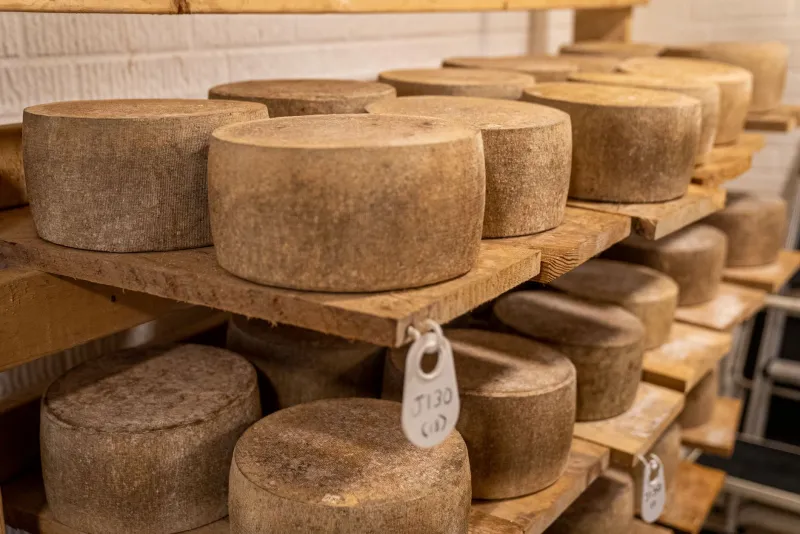
Cheese is a living thing. It breathes, ripens, and shifts character from week to week — a young Keen's in March is a different proposition entirely from the same cloth-bound cheddar in October. Vacuum-seal it too early and you trap it in arrested development, a cheese with nothing left to say. Cut it and leave it exposed to the air of a busy shop, and it dries at the edges while the paste beneath continues to mature. Either way, the consumer loses.
The pre-packed portion asks you to buy blind. You cannot press the paste to judge its give. You cannot lift it to your nose and catch the damp-cellar note of a good Taleggio or the grassy sweetness of a spring Cornish Yarg. You are asked to trust a photograph, and photographs of cheese are notoriously dishonest.
The Shopkeepers Who Won't Budge
Across Britain, a stubborn minority of deli owners continue to cut every portion to order, and they do so at a cost their accountants have presumably questioned. Their fridges hold open wheels under cloth; their counters bear the scars of a thousand knives. Ask for a sliver of Colston Bassett and you will be offered a taste before a single gram is weighed. Ask how a cheese is eating this week and you will receive an answer — and, more often than not, an opinion.
These are the merchants who understand that the wedge you choose yourself simply tastes better. Not because the physics of flavour has changed, but because the experience has. You have smelled it, touched it, argued about it, watched it being wrapped in paper rather than plastic. Anticipation, it turns out, is a seasoning.
Shopping With All the Senses
Long before anyone coined the phrase slow food, this was simply how food was bought. You judged the melon by its scent and the fish by its eye. The deli counter is one of the last places where that instinct survives intact — a small theatre of sight, smell and conversation in an age of frictionless retail.
So the next time you need cheese for a supper or a picnic, resist the chiller cabinet. Find the shop with the knives and the boards and the slightly pungent air. Ask questions. Take the taster. Watch the wire come down.
The wedge you carry home will be heavier in your hand than any sealed pack — and considerably lighter on the conscience.