Before the Crème Brûlée, the Crème de la Crème: Reviving the British Cheeseboard Dessert
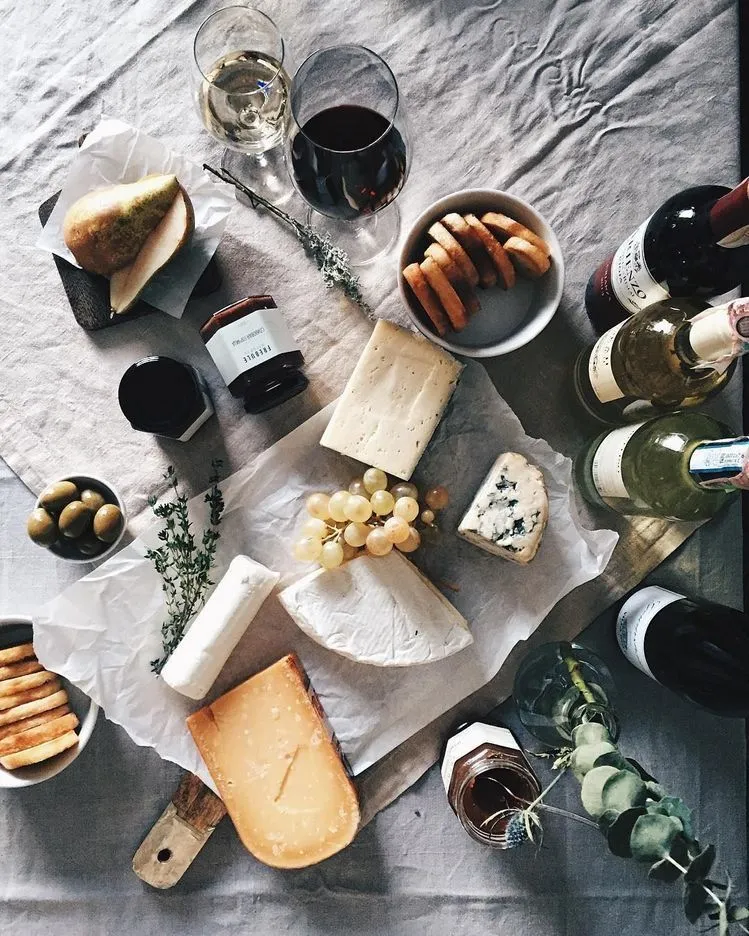
Photo: elegant after-dinner cheeseboard with Stilton, port glass and honey, dark moody food photography, via i.pinimg.com
There is a moment, in better restaurants across Britain, when the dessert trolley arrives and a quiet tragedy unfolds. The diner, having eaten admirably well, orders the chocolate fondant. The trolley — laden with a cloth-bound Cheddar, a spoonable Shropshire Blue, a bloomy Baron Bigod — is wheeled solemnly past. Untouched. Unregarded. A national treasure, dismissed in favour of a pudding that could be bought in any supermarket.
We ought to be ashamed of ourselves.
A Tradition We Keep Apologising For
The cheese course is not a French affectation we have borrowed and never quite felt comfortable wearing. It is ours. The Englishman's dinner has closed with cheese since the great country houses set out their trolleys, since the boarding house offered 'cheese and biscuits' with an air of finality, since the ploughman took his reward at the end of the day rather than the beginning. And yet somewhere along the way we allowed it to become apologetic — a token wedge of supermarket Edam beside a cellophane pack of biscuits, offered as though the kitchen had run out of ideas.
It deserves better. A properly constructed cheeseboard dessert is not the poor relation of the sweet course. It is the adult at the table: complex, unhurried, and quietly virtuous.
Before or After: The Question That Divides Tables
First, the quarrel. Should cheese come before the sweet course, as the French insist, or after it, as the British tradition holds? The French argument is physiological — sugar dulls the palate, and cheese served after dessert tastes of less. The British argument is social — cheese is the digestif of the table, the point at which the meal loosens, the port is poured and conversation turns agreeably long.
Both are correct, which is the most useful thing one can say about any culinary debate. If you are serving a single cheese, follow the French logic and let it precede the sweet. If you are building a board to be lingered over — and you should be — then the British position wins: cheese as the final act, the course that refuses to be rushed.
The Arithmetic of Appetite
The commonest failure of the after-dinner board is generosity of the wrong kind. Six cheeses at fifty grams each is not a dessert; it is a second dinner. The rule of thumb is fifty to seventy grams per person of cheese in total — perhaps three selections, chosen for contrast rather than abundance.
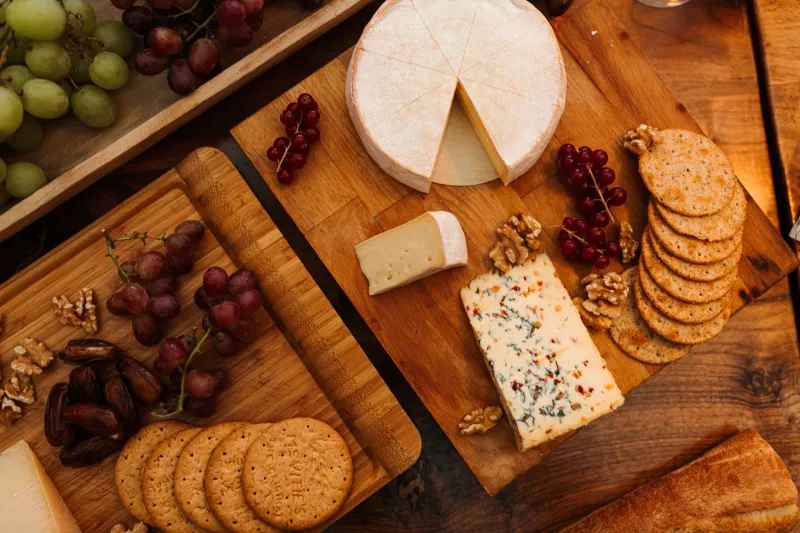
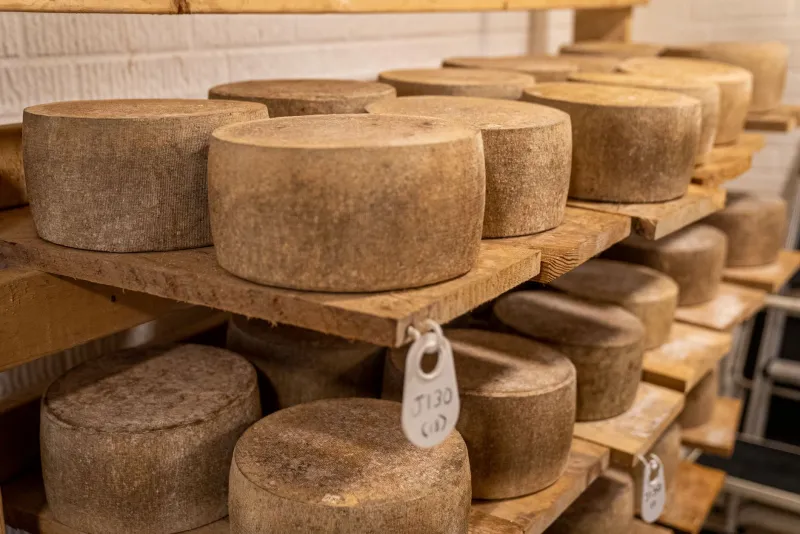
A sound trio for the British table might run thus: something soft and spoonable, a Baron Bigod or a Tunworth, oozing at the centre; something hard and slow, a cloth-bound Montgomery Cheddar or a mature Lincolnshire Poacher, with all the crystalline crunch of good patience; and something blue, a Stilton or a Stichelton, for its savoury, almost meaty finish. Three cheeses, three textures, one argument settled.
Temperature, the Most Ignited Instruction
No element of the cheese course is neglected so consistently as temperature. Cheese served straight from the refrigerator is a muffled instrument — the fats are firm, the aromas locked away. Cheese should leave the fridge a full two hours before serving, longer in a British January, less in an August heatwave. A cheese that has not been allowed to breathe at room temperature is a cheese you have paid for but not tasted.
The Accompaniments: Support, Not Competition
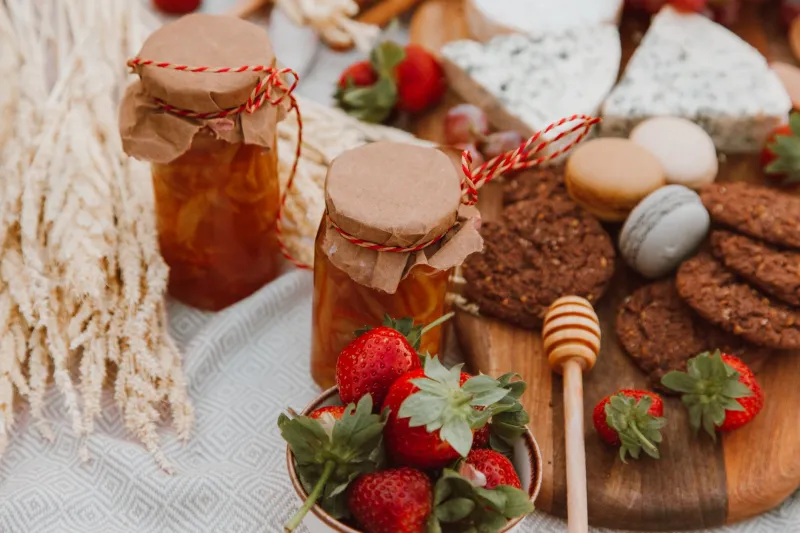
The board should be dressed, not costumed. Oat biscuits or a plain water cracker — the British larder's great gift to the cheese course — do their work without demanding attention. Beyond that, restraint: a spoonful of raw honey, a quince or damson membrillo, a handful of walnuts, perhaps a fig or two in season. Fruit that is too ripe, chutney that is too sweet, and grapes that are simply filling space are all, in their way, discourtesies to the cheese.
As for drink, port and Stilton is a marriage that has survived two centuries of scrutiny and need not be defended here. But do not overlook a sweet sherry, a Sauternes, or — increasingly and rather thrillingly — a British dessert wine from the southern counties.
The Civilised Ending
There is a reason the cheese course endures, beneath its reputation for fussiness. It is the only course that asks nothing of the kitchen at the moment of exhaustion, rewards the host who plans an hour ahead, and extends the evening by its very nature. A pudding is finished. A cheeseboard is sat with.
So next time the trolley passes, wave down the fondant. Order the cheese. Britain's finest dessert has been waiting patiently at room temperature, as it should be, all along.