The Golden Thread: How Raw British Honey Became the Cheese Board's Most Underrated Companion
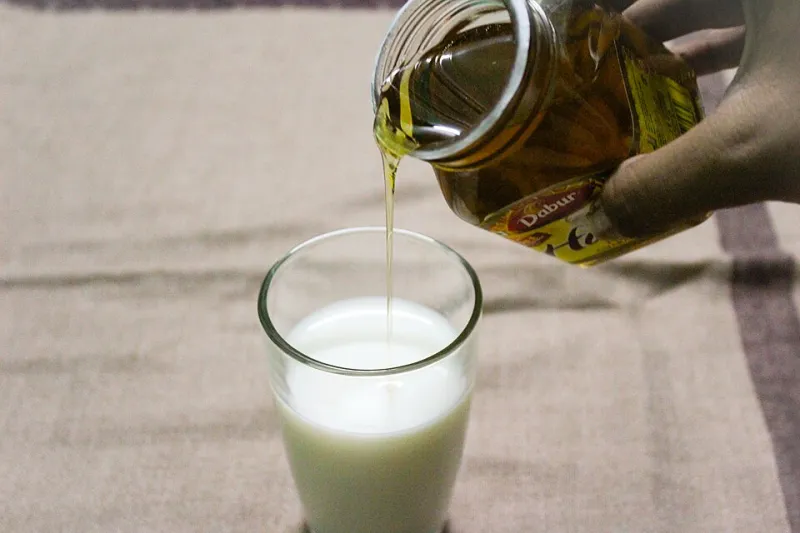
Photo: Nandhinikandhasamy, CC BY-SA 4.0, via Wikimedia Commons
There is a moment, familiar to anyone who has lingered over a well-considered cheese board, when the ordinary becomes extraordinary. A crumble of aged Montgomery cheddar, a sliver of quince — and then, if you are lucky, a thread of dark amber honey, dragged slowly from the jar. The sweetness does not simply accompany the cheese; it unlocks it.
Yet for all our recent devotion to artisan cheese and charcuterie, honey remains the great afterthought of the British deli counter. Squeezed into plastic bears, blended beyond recognition, it is routinely treated as little more than sugar in liquid form. This, frankly, is a scandal worth correcting.
The Renaissance of the Raw
Britain's raw honey revival has been gathering quietly for years. In the Yorkshire Moors, beekeepers still gather heather honey — thick, gelatinous and faintly smoky — from hives carried up onto the moorland each August. In Kent and the Cotswolds, wildflower honeys vary from field to field, season to season. Even London has joined in: rooftop apiaries atop Bond Street boutiques and Bermondsey warehouses now yield urban honeys with a distinctively mineral, almost treacly depth.
What unites them is what they are not: pasteurised, filtered, and stripped of character. Raw honey — unheated, lightly strained — retains its pollen, its enzymes and, crucially, its flavour. It crystallises, it varies from jar to jar, and it tastes of somewhere.
Reading the Label: Spotting the Real Thing
The supermarket shelf is a minefield of impostors. To find genuine raw British honey, look for a few markers. The word 'raw' should appear alongside a named apiary or producer — vague terms like 'natural' or 'pure' mean little. British honeys are often protected by named regional styles: heather honey, borage honey, oilseed rape honey. If the label lists a country of origin as 'a blend of EU and non-EU honeys', put it down and back away slowly.
Texture, too, is telling. Real raw honey granulates over time; a perfectly clear, unchanging liquid is more likely to have been heat-treated and fine-filtered into blandness.
Five Honeys, Five Cheeses: A Working Pairing Guide
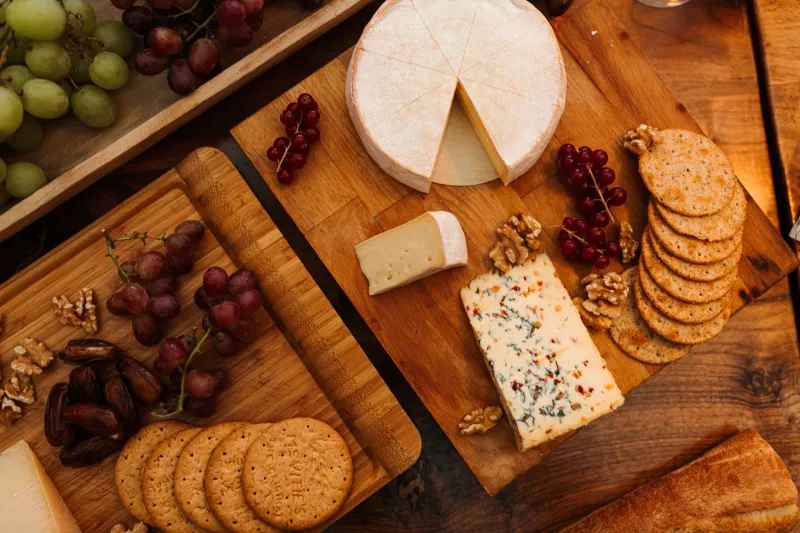
The theory is simple: match intensity with intensity, and contrast with contrast. Here are five combinations worth building a board around.
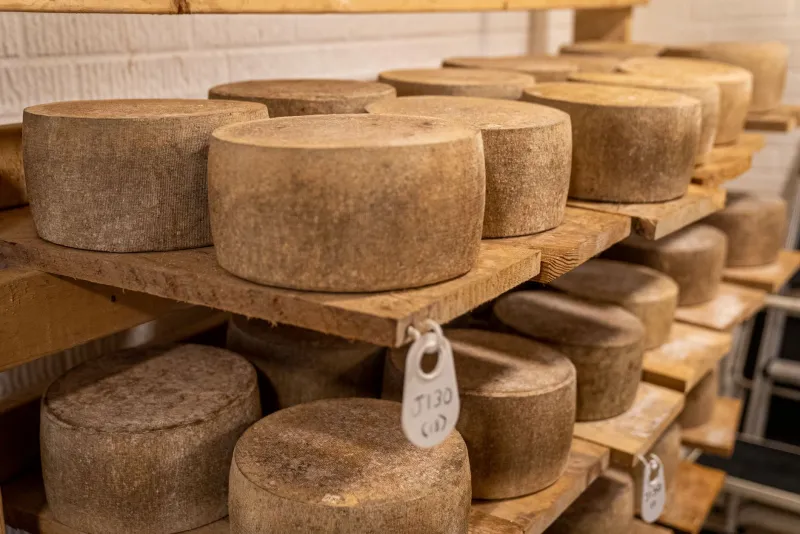
Heather honey with aged cheddar. The thixotropic, almost bitter depth of Yorkshire heather honey stands up beautifully to the crystalline crunch and beefy richness of a well-matured clothbound cheddar.
Borage honey with goat's curd. Light, delicate and faintly citrusy, borage honey dissolves into fresh goat's cheese like sunlight through muslin. A summer pairing of real elegance.
Linden (lime) honey with Comté-style Alpine cheeses. Floral and slightly mentholated, linden honey lifts the nutty, caramel notes of hard mountain cheeses — British examples from the Welsh Marches are increasingly fine.
Urban rooftop honey with blue cheese. The dark, resinous complexity of city honey — drawn from lime trees, chestnuts and parkland wildflowers — has the muscle to meet a punchy Stilton or a mellow Oxford Blue.
Soft-set wildflower honey with a washed-rind cheese. The gentle, rounded sweetness of a general wildflower honey calms the pungent, farmyard aromatics of a Reblochon-style British washed rind.
A Spoonful of Intent
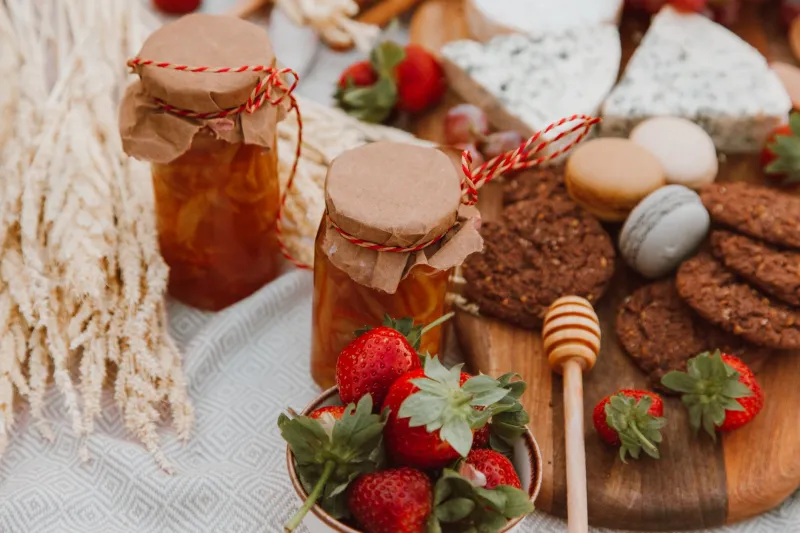
The beauty of honey as a condiment lies in its restraint. A small pot, a honey dipper or a good teaspoon, and a board given room to breathe. Serve it at room temperature — cold honey is mute honey — and resist the urge to over-pair. One or two honeys, chosen with intent, will do more for your cheese than a dozen accompaniments ever could.
In an age of endless novelty, there is something deeply satisfying about a pairing this old. The bees have been doing the hard work for millennia. All we need do is pour.