Churned, Salted, Sublime: Inside Britain's Small-Batch Butter Revival
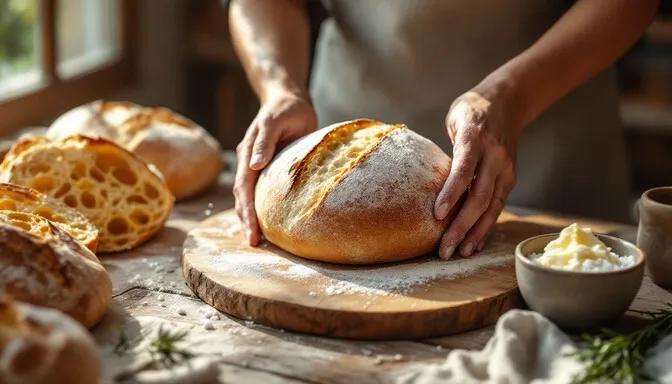
Photo: artisan cultured butter block sea salt wooden board sourdough, via images.stockcake.com
Butter, for most of the last century, was a commodity. Yellow, uniform, interchangeable — a background player at best. Yet walk into any serious deli counter today and you will find shelves of hand-churned cultured butter: blocks wrapped in parchment, tubs of whipped cream cheese-adjacent richness, sea-salted mounds flecked with herbs. British butter, it turns out, was never boring. It was simply waiting for someone to make it properly again.
What Exactly Is Cultured Butter?
The difference lies in the cream. Standard butter is churned from fresh, sweet cream. Cultured butter begins the same way — but before churning, the cream is left to ferment with live bacterial cultures for anywhere between twelve and forty-eight hours. Those cultures consume the lactose and produce lactic acid, along with a family of aromatic compounds that give cultured butter its distinctive tang.
The result is a butter that tastes of more: deeper, nuttier, faintly sour, with a complexity that supermarket sweet-cream blocks simply cannot muster. Add to that a higher fat content — often 82 per cent or above, against the 80 per cent legal minimum — and you have a product that behaves differently in the mouth. It melts at a slightly lower temperature, coating the palate rather than sitting on it.
The Makers Leading the Revival
Across the British Isles, a handful of dairies are treating butter with the reverence usually reserved for cheese. In Somerset and Dorset, small dairies are churning rich Jersey and Guernsey cream — breeds whose milk is naturally high in fat and golden with beta-carotene — into butters with a depth that borders on cheese-like. In Scotland, Orkney's dairies continue a maritime tradition of sea-salted churning, the salt crystals left deliberately visible in the finished block. Wales and Yorkshire have their own champions, each working with single-herd milk and traditional barrel churns.
What unites them is a philosophy: milk from identifiable herds, cream matured slowly, butter made in small batches and sold quickly. It is, in essence, the same story as craft cheese — provenance, patience and flavour.
Pairing, Cooking and Serving
On the cheese board. A slab of cultured butter alongside a mature clothbound Cheddar is a revelation — the buttery tang bridging the cheese's savoury depth. It also earns its place beside a young, milky Caerphilly or a nutty Comté-style British alpine.
At the table. With cultured butter, simplicity wins. Warm sourdough, a sprinkle of flaky sea salt, nothing else. For something more composed, whip it with a little raw honey, or fold through finely chopped chives and lemon zest.
In the pan. Cultured butter's lower water content makes it superb for cooking — sauces emulsify more smoothly, and a knob at the end of a steak or a heap of new potatoes delivers a nuttiness that sweet-cream butter cannot match. Be mindful in baking: the tang can be an asset in shortbread and madeleines, but adjust recipes that rely on precise liquid ratios.
Storing It Well
Cultured butter is more forgiving than it looks, but it deserves care. Keep it wrapped and refrigerated, away from strong-smelling foods — butter absorbs odours readily. For everyday use, a covered butter dish at room temperature softens the texture without harm, provided it is used within a day or two. For longer storage, freeze it; the flavour holds remarkably well for up to three months.
A Quiet Revolution, One Block at a Time
The renaissance of British cultured butter is not loud, but it is real. It asks us to reconsider an ingredient we thought we knew — and to pay, perhaps, twice as much for something that tastes five times better. At the deli counter, that is not a hard bargain at all. It is simply what happens when good cream, patience and craft are allowed to do their work.