Bitter Is Better: The Case for Eating Cold Food in the Coldest Month
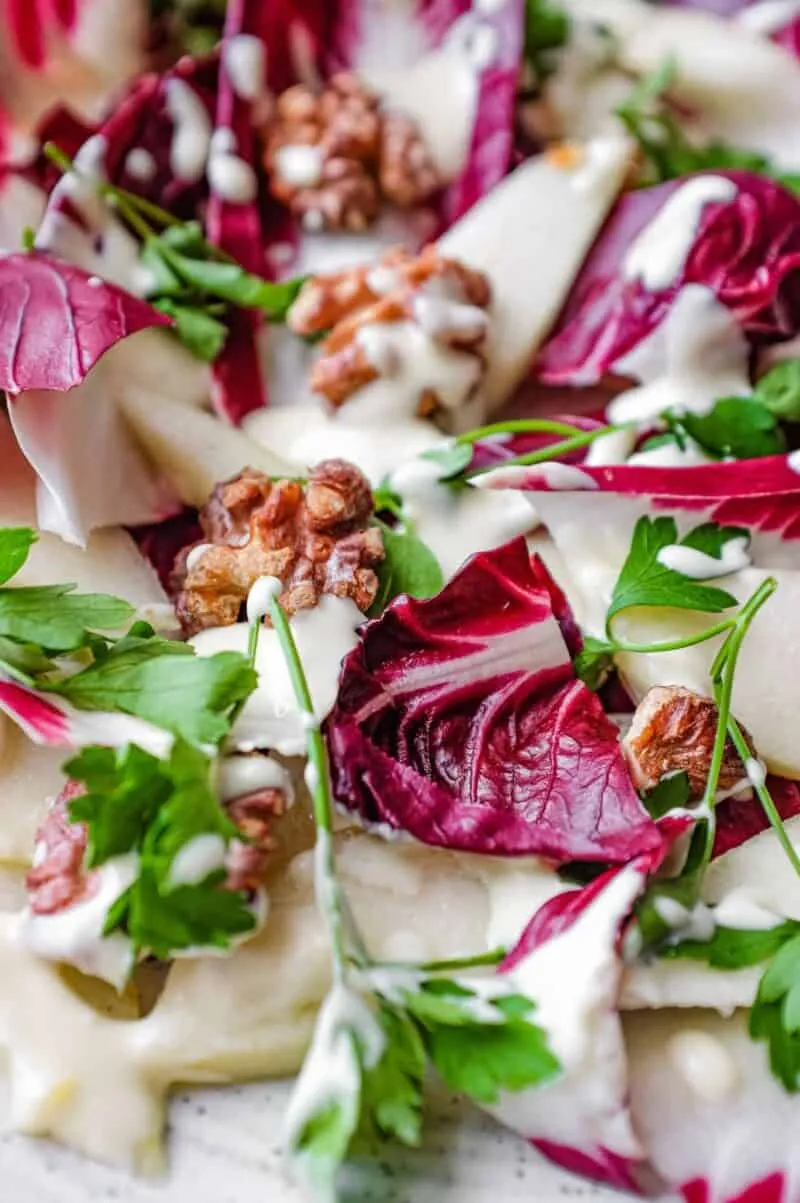
Photo: winter chicory salad radicchio pear walnut cheese rustic table, via www.cookeatworld.com
Somewhere along the way, Britain decided that salad was a summer food — a pale, apologetic arrangement of cucumber and under-ripe tomato, eaten under duress in a beer garden. In winter we retreat to casseroles and carb mountains, and the salad drawer sulks, forgotten, beneath a pile of root vegetables.
We would like to formally object. Because the coldest months produce the most interesting leaves of the year, and the cook who ignores them is missing one of the great quiet pleasures of the season.
The Chicory Is Your Friend
Start with the bitter leaves, because winter's great gift to the salad-maker is bitterness. Radicchio with its wine-red ribs and white veins like marble. The pale torpedo of a Treviso tardivo. Frisée, all frills and attitude. Endive, crunchy and faintly austere. These are leaves grown in the dark and the cold, and they taste of it — in the best possible way.
Bitterness, in food as in life, is a matter of balance. Cut it with fat, with sweetness, with salt, and it becomes something altogether more sophisticated: a leaf that stands up to a rich stew rather than wilting beside it. A salad of radicchio, pear and crumbled blue is not a starter; it is an event.
The Supporting Cast
Watercress, that peppery gem from the Hampshire chalk streams, is at its best from autumn through spring — British watercress loves the cold, and it shows. Forced rhubarb, those luminous pink sticks from the Yorkshire rhubarb triangle, brings the necessary sweetness, roasted gently with a little vanilla until it slumps into compote. A crisp apple — a Herefordshire Egremont Russet, ideally — adds bite. And a bottle of proper walnut oil, cold-pressed, amber and faintly toasty, is the single most transformative thing you can add to a winter larder.
The Cheese Question
Here is where Delikate gets properly excited. Bitter leaves and aged sheep's cheese is a pairing so correct it feels like cheating. The nutty, crystalline intensity of a well-matured Ossau-Iraty, or closer to home a good aged Berkswell or a Lincolnshire Poacher (cow's milk, but bear with us), plays against the chicory's snap like a well-drilled duet.
Sherry vinegar is the third member of the party. Its nutty, oxidative depth — so much more interesting than a standard white wine vinegar — binds leaf to cheese and begs for a slick of olive or walnut oil. Dress the leaves no more than five minutes before eating; bitterness wilts fast and sulkily.
Four Recipes for a Cold Plate
Radicchio, Roast Pear & Aged Berkswell Tear two radicchio heads into a wide bowl. Slice two firm pears, toss in a little butter and roast at 200°C until caramelised at the edges. While still warm, arrange over the leaves so they wilt them slightly. Shave or crumble over a generous fistful of aged Berkswell. Dress with three parts walnut oil to one part sherry vinegar, a scrape of shallot, salt, cracked pepper. Finish with toasted walnuts.
The Proper Winter Watercress Salad A generous bag of watercress, an Egremont Russet sliced paper-thin, and a fistful of candied walnuts. Dress with walnut oil, a splash of sherry vinegar and a teaspoon of honey. Crumble over aged Manchego or, better still, a British sheep's cheese with 18 months of age behind it. Eat immediately, ideally beside a fire.
Treviso, Forced Rhubarb & Blue Roast three sticks of forced rhubarb with a spoonful of honey and a vanilla pod until collapsing; cool. Slice a Treviso tardivo lengthways, dress with olive oil and sherry vinegar, and lay the rhubarb and its syrup over the top. Crumble a dolcelatte or a young Stilton across the whole affair. Sweet, bitter, creamy, sharp — the whole argument on one plate.
Frisée, Lardon & Sherry Vinaigrette For those who maintain that cold food cannot be cosy: a warm frisée salad with hot, crisp lardons and a sherry vinaigrette poured over while the pan is still sizzling, topped with a poached egg. The heat wilts only the tips; the stems stay crunchy. This is bistro food of the highest order and requires fifteen minutes.
A Word of Reassurance
To the nervous reader who still associates cold plates with dieting and January regret: we understand, and we are here to help. A winter salad, properly composed, is not penance. It is cheese, nuts, fruit and oil arranged with intent. It sits happily beside a roast, cuts through a cheeseboard, and — served with good bread and better butter — constitutes a perfectly respectable supper.
The casseroles will still be there tomorrow. Tonight, be brave. Be bitter. Buy the radicchio with the veins like marble, the sheep's cheese with the amber rind, and the vinegar that tastes faintly of toasted almonds.
Winter's cold plate, done properly, is not a compromise. It is the most refined thing on the table.